
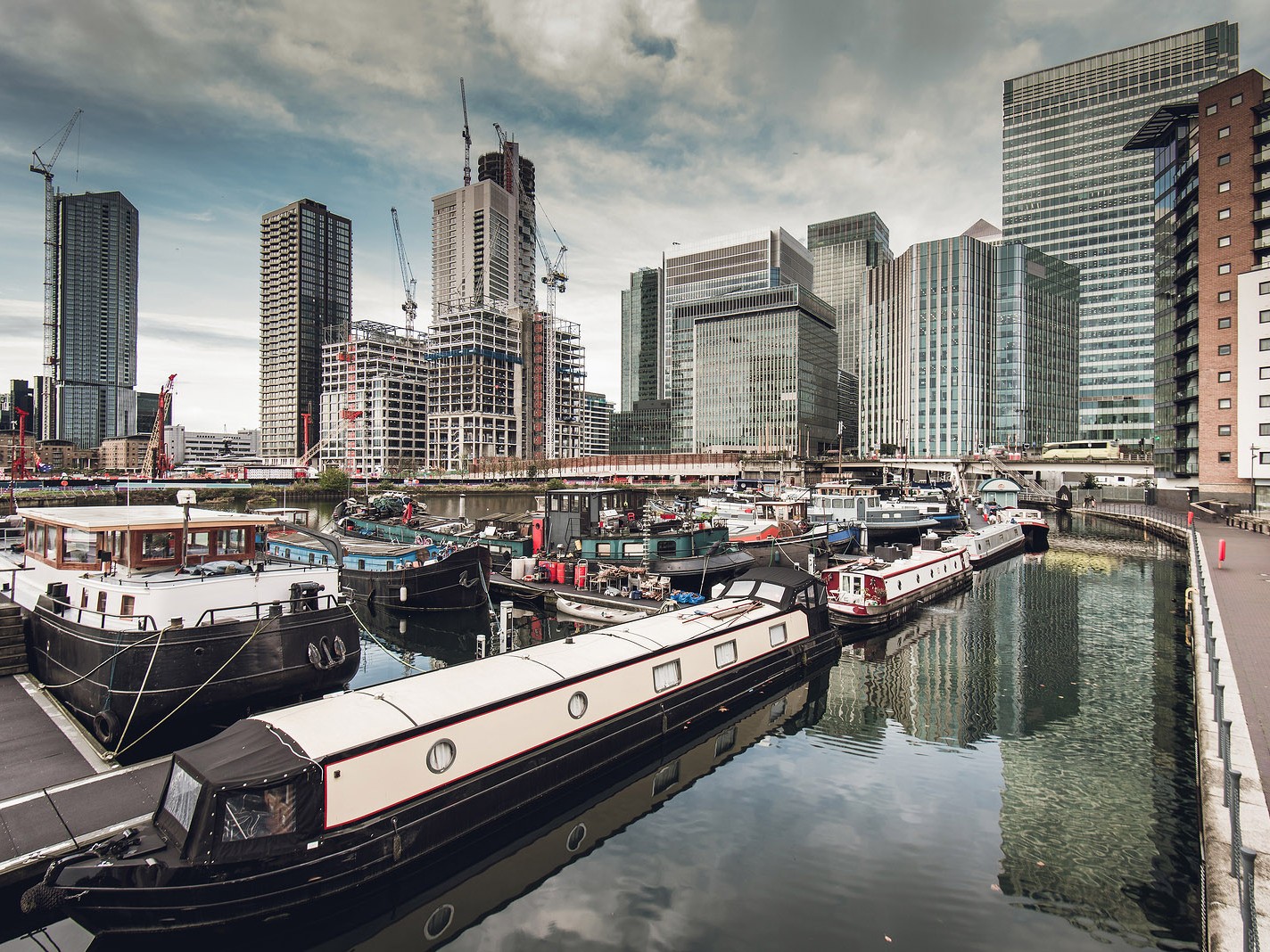
Finding a houseboat you can genuinely imagine yourself living on is exciting.
You have probably already spent far too many evenings looking at boats online. You know which layouts you like. You have started noticing moorings everywhere. You may even have progressed from casually browsing to working out whether you could actually make life on the water happen and then you find the one.
The location works, the interior is beautiful, you can picture yourself having coffee on deck on a summer morning and suddenly the whole thing feels very real. That is usually the point at which enthusiasm starts telling you to move quickly. It is also the point at which taking a little time to understand exactly what you are buying becomes particularly important.
Not because there is necessarily anything wrong with the boat, but because buying a houseboat is different from buying a traditional property and knowing what to look at before you commit can make the process considerably less daunting.
Every Houseboat Has a History
There isn’t one universal houseboat-buying process. Some vessels are sold privately, others are marketed through specialist brokers, some are sold with the benefit of an existing mooring arrangement, and others are sold as vessels that will need to be moved.
The documentation can vary too. One owner may have meticulously retained years of invoices, service records, manuals and survey reports. Another vessel may come with considerably less paperwork. That doesn’t automatically make one a good purchase and the other a bad one.
It simply means you need to look at the particular boat and transaction in front of you rather than assuming the process will work in exactly the same way as another purchase. That starts with looking beyond how lovely the boat appears in the photographs.
Beautiful Interiors Don’t Tell You Everything
Houseboats can be incredibly seductive. A beautifully converted barge with clever joinery, lots of natural light and a wood-burning stove can make it remarkably easy to start mentally arranging your furniture before you have even finished the viewing, but the cushions and paintwork are the easy things to see.
The more important questions tend to be less photogenic.
- How has the boat been maintained? Is there a service history?
- When was the hull last inspected?
- What systems are aboard and what condition are they in?
- Does the layout genuinely work for your everyday life rather than simply looking impressive?
- If the boat is being sold in situ, what exactly is the arrangement surrounding the mooring?
Sometimes the answers simply reinforce your initial impression that you have found a wonderful boat and sometimes they give you something to investigate further. Either outcome is useful.
Don’t Treat the Paperwork as an Afterthought
Nobody falls in love with a houseboat because of its paperwork but, nevertheless, the documents associated with a vessel can tell you an enormous amount. Depending on the boat and the transaction, you may be provided with registration documentation, previous surveys, maintenance and service records, manuals, invoices and information relating to the mooring.
The important thing is not simply to establish that a pile of documents exists; it is to understand what those documents actually tell you.
- What evidence is there about the boat’s history?
- Does the information correspond with what you have been told?
- Are there obvious gaps?
- Is there anything you don’t understand?
- Is there documentation you expected to see that hasn’t been provided?
Asking questions at this stage isn’t being difficult. You are considering making a significant purchase, so it is perfectly reasonable to want to understand it.
The Boat May Be Only Half the Story
If the houseboat is being sold in a desirable location, it can be tempting to think you are simply buying the boat exactly as you see it, but that isn’t necessarily the case.
The vessel and the right to keep it in that particular location may be two separate things.
This is why the mooring deserves proper attention before you commit. You want to understand whether it is residential or leisure, what agreement governs it, what the ongoing fees are, whether there are restrictions and, crucially, what happens when ownership of the boat changes.
- Can the existing arrangement transfer?
- Does the marina or mooring owner need to approve you?
- Will you be required to enter into a new agreement?
- Are there conditions attached to doing so?
For many houseboat owners, the mooring has an enormous impact on day-to-day life. It determines not only where you live but potentially your neighbours, parking, access, facilities, commuting arrangements and the community around you.
A fantastic boat in the wrong location, or without the mooring arrangement you thought you were acquiring, is a very different proposition. We look at this in more detail in Residential vs Leisure Moorings Explained.
A Survey Is About Information, Not Just Finding Faults
A marine survey is one of the most useful sources of independent information available to a houseboat buyer. The purpose isn’t simply to produce a list of things that are wrong with the boat. A good survey gives you a better understanding of the vessel’s condition before you make an important financial commitment.
It may identify work that requires immediate attention, it might highlight maintenance that should be budgeted for over the coming years, or it may simply provide welcome reassurance about the condition of the vessel. All of those outcomes have value.
What matters is that you are making your decision with more information than you had from the viewing alone. For more on what a survey covers and when to arrange one, see our guide to Marine Surveys Explained.
Ask the Questions You Think You’re Supposed to Know the Answers To
There is a peculiar tendency when making a major purchase to worry about asking a question that sounds obvious. Houseboats come with an entire vocabulary that may be completely unfamiliar if you have previously only owned conventional property. Nobody should expect a first-time buyer to understand all of it.
- Ask about the heating.
- Ask about electricity and water.
- Ask what the boat costs to run.
- Ask how old the major systems are.
- Ask what maintenance the current owner carries out each year.
- Ask why they are selling and how long they have owned it.
If something is mentioned that you don’t understand, ask what it means. It is much better to ask an apparently basic question before buying than to discover the answer afterwards when it suddenly becomes rather important.
Don’t Forget the Practicalities of Actually Living There
There is another category of due diligence that has nothing to do with documents or surveys. It is simply imagining an ordinary Tuesday in January rather than a beautiful Sunday in July.
- Where will you park?
- How far will you carry the shopping?
- Is there reliable internet if you work from home?
- How is the boat heated?
- What are the arrangements for water, electricity and waste?
- Is access straightforward for children, older relatives or anyone with mobility difficulties?
- If you have a dog, where will you take it out late at night?
None of these questions are particularly exciting, but if the boat is going to be your home, their answers may ultimately matter considerably more than the colour of the kitchen.
Build the Right Team Around the Purchase
Depending on the boat, a houseboat purchase can involve several different professionals. There may be a broker or private seller, marine surveyor, insurer, finance provider, marina or mooring operator and someone advising you independently on the transaction and documentation. They each have different roles.
The broker may know the vessel and market extremely well but generally acts for the seller. The surveyor is there to assess the physical condition of the vessel. The marina or mooring operator deals with the arrangements surrounding where the boat is kept. Independent advice can help you understand the documentation, the transaction itself and how the different pieces fit together.
You don’t necessarily need to become an expert in every aspect of houseboat ownership before buying one, but you do need to know when something falls outside your own knowledge and who can help you understand it.
Don’t Let Excitement Create Artificial Urgency
There will always be an element of emotion in buying somewhere to live and, arguably, there should be. A home is not simply another asset, and choosing to live on the water is often as much an emotional decision as a practical one, but excitement and urgency are not the same thing.
If you are being asked to sign something, make a payment or commit to a purchase, you should understand what you are agreeing to before you do it. Read the paperwork, arrange the survey, understand the mooring, ask your questions and take advice where you need it.
Then, if everything stacks up, you can move forward knowing that your decision isn’t based solely on falling in love with a beautiful boat. It is based on understanding what you are actually buying. That makes getting the keys—or perhaps more appropriately, stepping aboard—considerably more enjoyable.
How Yachting Lawyers Can Help
Houseboat purchases can involve a combination of vessel documentation, contractual arrangements and mooring considerations that will be unfamiliar to many buyers.
Yachting Lawyers provides independent marine consultancy support to houseboat buyers, helping clients understand the purchase process, the documentation involved and the practical considerations surrounding the transaction before they commit.
If you are considering buying a houseboat and would like independent guidance tailored to your circumstances, please get in touch.